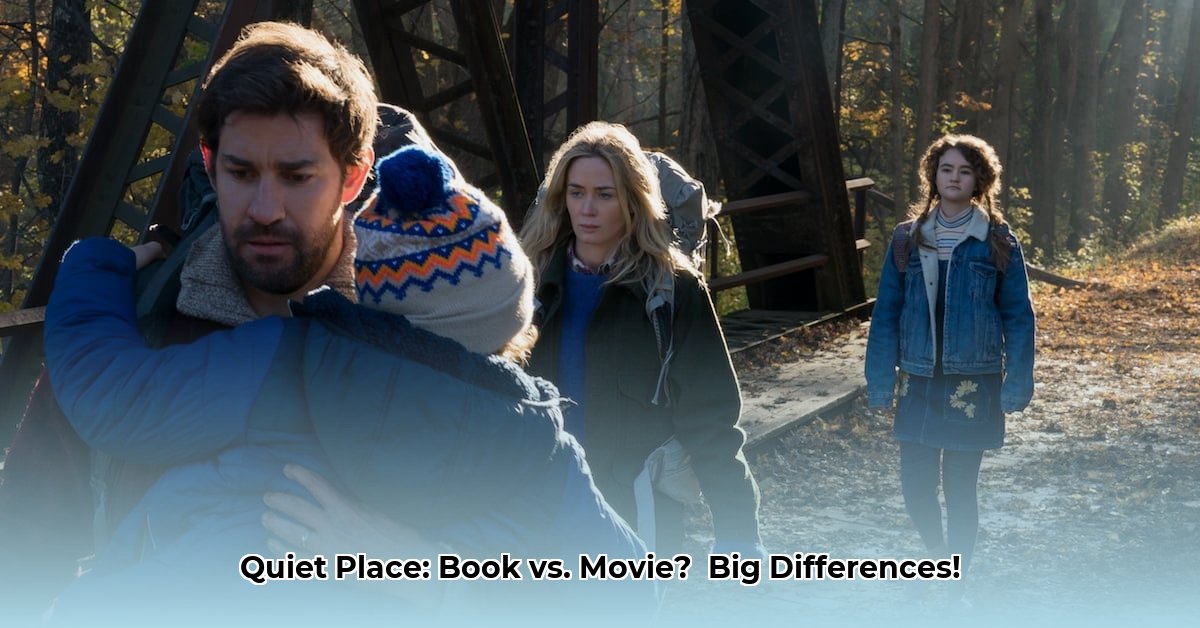
A Quiet Place: Divergent Narratives in Book and Film
Let's dissect the significant differences between the film A Quiet Place and its often-misunderstood literary counterpart. While both explore a world threatened by sound-sensitive creatures, the narrative structures, character development, and thematic explorations diverge significantly, making a direct comparison akin to contrasting apples and oranges. A key point of clarification: The movie's premise is not directly drawn from Seichō Matsumoto's novel of the same name, but rather draws inspiration from Tim Lebbon's The Silence. This initial clarification is crucial to understanding the distinct approaches each work employs. How the film adapts (and departs from) this source material offers a rich opportunity for film studies analysis. For a deeper dive into the book, check out this analysis.
Silence: A World of Contrasting Interpretations
The most striking difference lies in the treatment of silence itself. In the novel, silence is a complex, psychological element; a space for concealed secrets, suspense, and introspection. It's where the protagonist unravels a personal mystery, fostering a character-driven narrative focused on internal struggles. The film, conversely, transforms silence into an immediate life-or-death threat. This pivotal shift transforms the experience entirely. The novel is a character study grounded in introspection; the film is a visceral thriller emphasizing unrelenting tension and immediate danger. Isn't it intriguing how a single element can dramatically alter the narrative's tone and focus?
Narrative Structures: A Slow Burn vs. High-Octane Suspense
The narrative pacing drastically differs. The novel unfolds as a slow burn, methodically delving into the protagonist's internal world. It prioritizes character development, allowing introspection to build tension and suspense. The film, in contrast, employs a high-octane, relentlessly paced structure designed to maintain constant suspense. The film's plot-driven structure prioritizes action and immediate threats over personal reflection. This stark contrast highlights the adaptability of the central thematic premise.
Characters: Individual Struggles vs. Family Dynamics
Character development further underscores the contrasting approaches. The novel centers on a single individual grappling with personal loss and societal pressures, focusing on internal conflicts and psychological turmoil. The film, however, features a family unit fighting for survival. Their challenges are external and immediate, emphasizing the fight for life itself. How these vastly different protagonists navigate similar threats provides a fascinating case study in character adaptation.
Themes: Shared Ground, Separate Explorations
Despite sharing common themes—survival, family bonds, and the impact of trauma—the book and the film handle these in starkly different ways. The novel delves deep into the psychological effects of societal pressures, examining the internal struggles of an individual. The film showcases the raw, visceral reality of survival in a post-apocalyptic world, prioritizing external threats over inner turmoil. Both explore the significance of silence, yet with vastly divergent interpretations. A compelling area for future research would be the comparative analysis of how these shared themes are presented.
The Silence Myth: Setting the Record Straight
It's crucial to address the frequent misattribution of A Quiet Place's source material. Many incorrectly link the film to Tim Lebbon's The Silence. While both works share the superficial concept of creatures hunting based on sound, they are vastly different. This misconception highlights the power of shared themes to create unintended associations and offers an interesting study in audience reception.
A Comparative Table: Book vs. Movie
| Feature | Book | Film |
|---|---|---|
| Main Focus | Psychological mystery, personal loss | Survival thriller, family dynamics |
| Pacing | Slow-burn, introspective | Fast-paced, suspenseful |
| Protagonist's Goal | Uncovering truth, dealing with grief | Protecting family, surviving the creatures |
| Main Conflict | Internal struggle, societal pressures | External threat, fight for survival |
| Use of Silence | Atmosphere, mystery, reflection | Survival tactic, source of constant danger |
Actionable Intelligence: Research Opportunities
This comparative analysis yields several opportunities for future research: Film scholars can analyze the film's sound design; literary critics can explore the novel's thematic resonance across various cultures; filmmakers can learn from the differing approaches to tension; and sociologists can examine how both works reflect societal anxieties. This provides fertile ground for interdisciplinary study.
Conclusion: Two Distinct "Quiet Places"
The differences between the book and film are profound. While both explore the theme of silence and survival, their narrative structures, character development, and thematic explorations diverge considerably, resulting in two unique artistic expressions. The contrast presents an ideal starting point for analyzing adaptations and exploring the evolution of thematic concepts in different narrative mediums.